Table of Contents
1. Introduction
2. Why Pile Breakers Need Careful Buying
2.1 What the Machine Actually Does
2.2 Where Buyers Go Wrong
3. Where the Suppliers Are
3.1 China’s Machinery Belts
3.2 Buying Outside China
4. Specifications to Pin Down First
4.1 Pile Diameter Range
4.2 Matching Your Excavator
4.3 Steel and Wear Parts
5. Check the Seller Before You Pay
5.1 Licences and Bank Details
5.2 Seeing the Workshop
6. Quotes and Paying Safely
7. Getting a Heavy Machine Home
7.1 Crating the Machine
7.2 Route and Paperwork
8. FAQs
1. Is it safer to order from the maker?
2. How soon will it reach Pakistan?
3. Can I check the machine before the last payment?
4. What papers will customs want?
9. Conclusion
1. Introduction
Honestly, a pile breaker is nothing fancy, just a steel frame with a few hydraulic rams. You fit it on an excavator, close it round the pile, and the top cracks off with the rebar left standing. When it fails, the crew sits idle, and a machine bought overseas can’t be repaired in a day.
Buyers often rush global supplier sourcing for hydraulic concrete pile breakers, and that is usually where the trouble begins. Below, you’ll see how to shortlist makers, which questions to put to them, how to confirm they are genuine, and what it takes to bring the machine to your door. At Yiwa Logistics, we help Pakistani businesses buy from abroad, and our Product Sourcing team keeps meeting the same avoidable mistakes.
2. Why Pile Breakers Need Careful Buying
Before anything else, get a clear picture of how this machine works on a job. A feature that looks minor on a quotation can cause real trouble when the breaker is running day after day.
2.1 What the Machine Actually Does
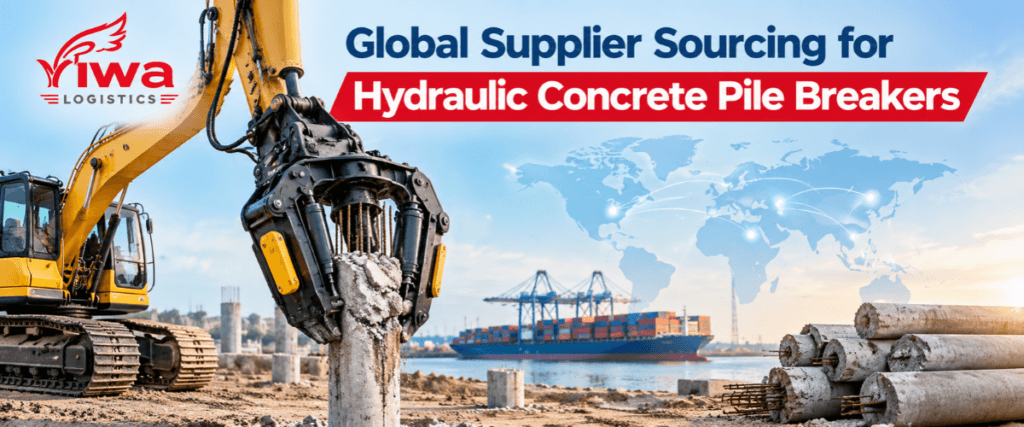
The breaker bolts onto the excavator’s arm and clamps around the pile from the sides. The cylinders push inward until the head cracks off, leaving the steel bars intact.
2.2 Where Buyers Go Wrong
Most trouble starts with a catalogue. Two machines can look identical in photos yet differ in cylinder quality, steel grade and fit.
3. Where the Suppliers Are
You can find these machines in many countries. Price, build quality and who will answer your calls after the sale usually decide which ones stay on your shortlist.
3.1 China’s Machinery Belts
Most of the choice is in China, where makers sit mainly in Shandong and Jiangsu. When you start global supplier sourcing for hydraulic concrete pile breakers, you’ll run into two kinds of sellers: actual factories, and traders who just resell their stock.
3.2 Buying Outside China
Machines from Europe, Turkey and South Korea cost more, but you’ll often find the paperwork is cleaner and someone picks up the phone sooner. Ask at least two regions for a price, then compare the offers before you make up your mind.
4. Specifications to Pin Down First
A supplier can only quote properly when you give clear details. These three points should be written down before any enquiry goes out.
4.1 Pile Diameter Range
Write down the smallest and largest pile you will cut, in millimetres. Breakers are built for a stated range, so ask whether it is fixed or adjustable.
4.2 Matching Your Excavator
Send your excavator’s make, model, weight class, hydraulic flow and pressure. Also ask for the bracket drawing so the mounting fits first time.
4.3 Steel and Wear Parts
Ask about frame steel, cylinder seals and which parts wear first. Yiwa Logistics tells every buyer to request a priced spare parts list.
5. Check the Seller Before You Pay
Most of the work in sourcing is checking the seller, and the machine comes second. In global supplier sourcing for hydraulic concrete pile breakers, that means being sure of who is really getting your money.
5.1 Licences and Bank Details
Check that the licence, the invoice and the bank account all carry the same company name. Then work out whether the seller makes the machines or only resells them, and call a customer they’ve served before.
5.2 Seeing the Workshop
Ask for a live video walk through the workshop, with a finished unit beside its serial plate. Our Supplier Verification service at Yiwa Logistics checks licences, capacity and trading history before any money moves.
6. Quotes and Paying Safely
Get every supplier to quote against one written spec, otherwise the numbers mean nothing. Look at what each price covers: the crate, spare seals, the bracket, and whether the term is FOB or CIF. Don’t pay everything in advance. A deposit when production starts is normal, but the balance should wait until you have watched the machine work. In global supplier sourcing for hydraulic concrete pile breakers, the money left to pay at the end is your only real leverage, so use it. Yiwa Logistics advises clients to get every agreed term written into the contract.
7. Getting a Heavy Machine Home
Payment is only half the job, because the machine hasn’t left the factory yet. A load this heavy calls for tough packing, a booked route and documents that match line for line.
7.1 Crating the Machine
Put it in writing that the machine must be fixed to a steel cradle or packed in a strong crate, with plugs fitted in the hydraulic ports. Request loading photos and ask how the machine will be tied down. Cheap packing is a classic reason for damage claims, and in global supplier sourcing for hydraulic concrete pile breakers nobody wants to argue over a bent frame. Yiwa Logistics also suggests checking the lifting points.
7.2 Route and Paperwork
A machine this heavy usually goes by sea freight. Check that the invoice, packing list and bill of lading match before it sails, because customs can hold the shipment if they don’t. Yiwa Logistics books the shipping, handles the paperwork and clears the goods, so your global supplier sourcing for hydraulic concrete pile breakers doesn’t hit a hold-up at the end.
8. FAQs
1. Is it safer to order from the maker?
Usually yes, since a factory can adjust the machine, though a good trader can save you effort.
2. How soon will it reach Pakistan?
The factory usually needs several weeks to build it. After that, count the sea journey and the days it sits at the port. Don’t leave the timeline vague, get it written into the contract.
3. Can I check the machine before the last payment?
Yes, and you should. A video of it breaking a real pile works, or you can send someone you trust to the factory to see it run.
4. What papers will customs want?
The commercial invoice, packing list and bill of lading are the main ones, and your clearing agent will flag anything extra.
9. Conclusion
Bringing in a pile breaker from abroad isn’t complicated, but patience pays off. Lock down your specs, compare quotes like for like, check who the seller really is, and keep the final payment until you’ve watched the machine run. Do that, and global supplier sourcing for hydraulic concrete pile breakers costs you less and stops your site sitting idle. Once the deal is done, our Sea Freight team at Yiwa Logistics can move it safely to Pakistan. Contact Yiwa Logistics for a free quote and let us handle the details.