Table of Content
1.The Problem With Paying First
2.Papers Worth Asking For
2.1 License and Its Code
2.2 Where the Money Goes
2.3 Small Details That Add Up
3.Searching the Records
3.1 The Government Database
3.2 Shipping Proof
4.Maker or Middleman
5.Reasons to Back Out
6.Letting a Local Team Do the Visit
7.FAQs
1. How much time should I set aside for this?
2. Does a genuine license mean the supplier can be trusted?
3. Do I need to know Chinese to check a company?
4. Is Chinese company verification worth it on a small first order?
8.Conclusion
Introdution:
Most import horror stories start the same way. A good price, a friendly salesperson, a request for a deposit, and then silence. If I had to give one piece of advice to a new buyer, it’d be to do Chinese company verification before talking about anything else. Samples, shipping and discounts can all wait a week. Your money can’t be fetched back.
1. The Problem With Paying First
Once a transfer to China goes through, there’s very little a bank can do. Suing a seller in another country is slow and rarely worth the cost. So the only real protection is what you do before you pay.
2. Papers Worth Asking For
2.1 License and Its Code
Start with the business license. Registered firms in China carry one, and it shows an 18-character code, the unified social credit code. Ask for a clear scan.
Now look at the company name on it. Is it the same as the name on the invoice? And the same again on the bank details? Matching is what you want. A mismatch doesn’t prove fraud, but it needs a proper explanation before you go further.
2.2 Where the Money Goes
I’d want payment going into a company account under the registered name. If a salesperson says “just send it to my colleague’s personal account,” pause the whole deal. Occasionally there’s a dull tax reason. Get it in writing, and be a bit more careful from there.
2.3 Small Details That Add Up
Put the address into a map. Does it look like where goods get made, or a flat above a shop? Look at the email address too, because a free webmail address on a company claiming twenty years of trade looks odd. Then try the landline. If it rings out all week, make a note.
3. Searching the Records
3.1 The Government Database.
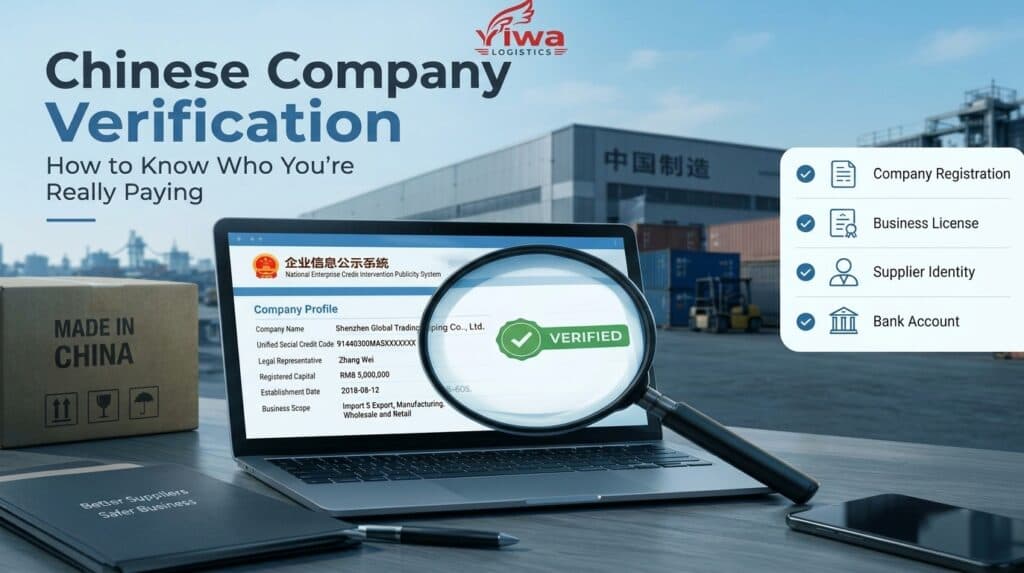
China runs a public platform called the National Enterprise Credit Information Publicity System. Search the company and you’ll see if it’s active, who legally represents it, how much capital it registered and when it started.
Qichacha and Tianyancha show the same records in an easier layout, though in Chinese. Use your browser’s translate option. Then check the story against the data.
3.2 Shipping Proof
A seller who exports regularly keeps old invoices and bills of lading. Ask for a couple with the buyer’s name covered. If you can, also ask whether any Pakistani customer would answer a short message. A refusal isn’t automatically a bad sign, because some buyers want privacy, but it should count for something in your decision.
4. Maker or Middleman
Lots of sellers say “factory” on their profile when they really resell. Resellers aren’t criminals. Some are excellent. What matters is that you know which one you’re talking to, since a maker can usually give a lower unit price and fix problems at the source.
The license tells you a lot. Under business scope, wording about production suggests a maker, whereas “trading” or “import and export” suggests a reseller. After that, ask for a live video call. Pick one machine or one product off their line and have them show it. Pre-recorded clips and stock photos are easy to pass off, while a live camera is a lot harder to fake.
5. Reasons to Back Out
You don’t need to be paranoid, but some things are worth walking away from. A quote far below every other offer. Pressure to pay today because “the price ends tonight”. A refusal to appear on camera. Names on the paperwork that disagree. And my least favourite: new bank details arriving by email after you’d already agreed on others.
One of these could be harmless. Two or three at once, and I’d leave.
6. Letting a Local Team Do the Visit
There’s a limit to what you can do from a desk in Faisalabad. Eventually someone has to stand in front of the building, meet the owner and see the production line running.
That’s the kind of job Yiwa Logistics (https://yiwalogistics.com/) takes on for Pakistani importers. Their team in China reviews your supplier’s papers, goes to the site and confirms who really owns the business before you transfer a rupee. If you’d like Chinese company verification handled by people who can walk into the workshop, it saves a lot of guessing.
7. FAQs
1. How much time should I set aside for this?
A day, maybe two, if you’re only going through the documents and searching the registry. A visit takes longer, depending on where the factory is.
2. Does a genuine license mean the supplier can be trusted?
Only partly. A genuine license proves the business exists. It says nothing about whether the owner is honest or can make your order, so keep going with the other checks.
3. Do I need to know Chinese to check a company?
You don’t. Browser translation covers most registry pages, and a local agent can read the originals and confirm anything unclear.
4. Is Chinese company verification worth it on a small first order?
I’d say yes. A first order is when you know the least about the seller, and a small check costs far less than a lost deposit.
8. Conclusion
A short video call from the workshop floor clears up what the papers can’t, and anything still unclear can be left to someone who lives in China and can go and look. Chinese company verification won’t make an order perfect, but it takes the worst risks off the table. And if you’d