Table of Contents
- 1. Introduction
- 2. The Inspection Itself
- 3. Extra Risks for Pakistani Buyers
- 4. What a Proper Inspection Covers
- 5. Getting the Timing Right
- 6. Where Importers Usually Go Wrong
- 7. How We Handle It at Yiwa
- 8. FAQs
- 9. Conclusion
1. Introduction
Anyone who has spent time around importers in Karachi or Lahore has heard this one. A container turns up, and it’s a disaster. Funny thing is, the build-up always looks the same. Sample approved. Supplier friendly, answering in minutes. Advance paid without much thinking.
Then somebody cuts open a carton and finds goods that don’t resemble the sample. The supplier goes quiet. The money’s gone, and so is your leverage. All of this could have been caught with a small fee for a check before the cargo left China. That’s why a Supplier Verification decent makes inspection part of every order. Read on and you’ll see how the process works and what you get out of it.
2. The Inspection Itself
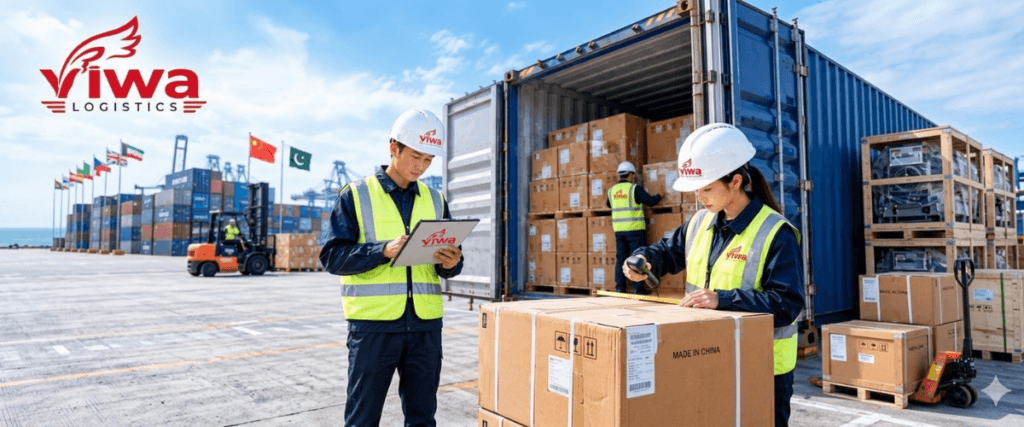
Shortly before loading, an inspector hired by you visits the factory and looks at the finished goods. Simple as that. Since you’re paying, they answer to you alone, and their report says what they actually saw.
Cartons are chosen at random, and the packers get no warning. The inspector opens a selection and compares what’s inside to your purchase order and the approved sample. Basically the inspector is answering three questions. Was the right number made? Is it the product you ordered? Will the cartons survive the trip? Lab tests and factory audits are different services, but you can add them to the same visit. In the end you get a straight answer about your cargo, at a point when the factory can still correct it.
3. Extra Risks for Pakistani Buyers
Any import has its risks. Bringing goods from China to Pakistan adds a few more, and every one of them makes a mistake cost you more.
3.1 A long wait before you see the goods
Loading day and the day you first see the goods can be weeks apart. By the time somebody opens a carton in Karachi, the supplier has usually moved on to another customer’s order.
3.2 Money leaves early
Suppliers tend to ask for a big deposit, and plenty want the balance before shipping too. Check the supplier out before you send any deposit and a lot of that risk disappears. After you’ve paid everything, you’ve got very little leverage left. Hold the final payment until the inspection comes back clean.
3.3 Costs that never come back
Duty, freight and port fees get charged on every unit that lands in Pakistan, and no one gives that money back if the goods won’t sell. Add a shaky exchange rate and a thin margin can vanish overnight.
3.4 Little room to chase a claim
Going after a seller in another country eats time and money, and there’s no promise you’ll win. Stopping a problem early costs far less than arguing over it later.
None of this is a dig at Chinese manufacturers as a whole. Most are honest. Mistakes tend to happen when a factory is rushing to finish, and a visit just before dispatch is the practical way to catch them.
4. What a Proper Inspection Covers
Some inspections are little more than a stroll round a warehouse with a phone camera. A proper one, like our Quality Inspection service, follows a set routine.
4.1 Counting and sampling
The cartons get counted first. Then units are pulled from different pallets using a recognised sampling table.
4.2 Matching the specification
Materials, dimensions, colour, weight and how the product works all get compared with your approved sample. If a cheaper material was swapped in, that’s usually where it shows up.
4.3 Finish and performance
Anything like scratches, loose parts or misprints gets written down. A few basic function tests follow, and every fault gets a severity grade.
4.4 Packaging details
A few cartons get roughed up deliberately: squeezed, lifted, pressed down. Will they hold up on the road? That’s what this shows. The inspector also matches shipping marks, barcodes, carton sizes and weights to your documents. Get one wrong and you could end up with crushed goods, or a container stuck at the port.
4.5 Visual proof
Every defect gets photographed and put in the report. A photo of the scratch or crack does the talking, so nobody has to take anyone’s word for it.
The report ends with a ruling: pass, fail, or pass with conditions. Need lab tests too? Or a factory audit, or a person on site during loading? Just say so when you book and it gets done during the same visit.
5. Getting the Timing Right
People forget that when the inspector visits is half the battle. We’d send someone in once roughly 80 to 90 percent of the order is finished and boxed.
Too early, and the machines are still humming. The factory gets to sort its problems out quietly after the inspector walks out. Inspect after loading and a failure turns into an argument about container bookings and warehouse charges, one buyers rarely win. The ideal gap between finishing and loading is short. Most goods are ready, the container’s still empty, and there are a few spare days to repair or remake anything that’s rejected.
Let the supplier know a check is on the way. Factories that know someone will check usually try harder.
On a large order, add a second inspection around the halfway mark. It more than pays back. Factory Visits are another option, with someone standing on the floor while production runs. Spot a wrong material or a worn mould then, and one fix covers the whole run instead of leaving you digging through hundreds of finished cartons.
6. Where Importers Usually Go Wrong
Most inspection trouble doesn’t begin at the factory. It begins with how the buyer sets up the order, before a single unit is made. The same few mistakes come up again and again, and every one is easy to dodge.
6.1 Using the supplier’s own inspector
When the factory pays the inspector, don’t expect a strict one.
6.2 No written brief or defect limits
Requirements buried in old chats and emails give the inspector nothing firm to check against. Give them the complete specs plus the signed sample, and say which faults are deal-breakers and which are only cosmetic.
Pick a number for the defects you can live with. Tell the supplier before production ends, and put it in the contract. If a batch fails, both sides already know the limit, so time goes into fixing things rather than arguing.
6.3 Paying before reading the full report
A pass on the first page can hide repeated small faults further down. Only pay the balance once you’ve read the findings.
6.4 Assuming one good result lasts forever
Don’t assume a supplier who was great in spring will still be great by autumn.
6.5 Going for the lowest price
Cheap inspectors often skip random sampling. The fee is tiny compared with what your shipment is worth, so this is no place to save money.
7. How We Handle It at Yiwa
Yiwa Logistics works with Pakistani buyers as a China sourcing company. We start at the factory, since that’s where most problems begin.
We start by talking through your requirements with you. From that discussion we prepare one written brief covering look and function, the approved sample, carton packing, and the defect tolerance you are comfortable with. Our inspector works from the brief at the factory, and from nothing else.
As production nears the end, one of our people visits the factory, picks items at random, and sends you a photo report along with a clear recommendation. It’s part of our quality inspection service, and we pair it with sea freight , so the whole chain behind the goods is checked, not only the last carton.
If a batch fails, we go back to the factory and press for repairs or a fresh run of the faulty units. Nothing goes into the container until we’ve seen the goods again. Whether your cargo goes we book it, and we handle customs clearance in Pakistan as well. You only ever talk to one team, from the day you order to the day the goods arrive.
8. FAQs
1. How much should I budget for an inspection?
Pricing moves with the factory’s location, the size of your order, and the number of inspector days it takes. In general it comes to a small percentage of what the cargo is worth, which is nothing next to the loss from one bad container.
2. When does the report reach me?
Good inspection companies usually send the report, photos included, a day or two after the visit. That leaves you time to decide about the balance payment before the container is packed.
3. What if my goods don’t pass?
Hold the remaining payment. Make the supplier pay to repair or remake the bad units. Once that’s done, send the inspector back for a second look. Only ship once the goods pass.
4. Is an inspection worth it for a small order?
In most cases, it is. Smaller orders tend to go to less-proven suppliers, while shipping, customs duty and port charges stay the same no matter what condition the goods are in. Paying for a short check is better than getting stuck with goods you cannot sell.
9. Conclusion
Booking an inspection doesn’t mean you suspect your supplier of anything. The fee is small. What you buy is early knowledge: do the goods match the order, while there’s still room to fix things? Pick an inspector who works for nobody but you. Put your requirements in writing, settle the visit date, read the full report, and keep the last payment until you’re satisfied.
Need a that actually checks quality on every order? Yiwa Logistics is ready to help you source, inspect and ship with a lot less stress.